Why choosing the right HDPE pipe manufacturer matters more in 2026
HDPE pipes sit at the centre of almost every major project — Jal Jeevan Mission, Smart City, BharatNet, PMKSY, PM-KUSUM, PHED, Smart Village and highway cross-drainage. With a large number of manufacturers in India and a wide quality band, choosing the wrong supplier can translate into joint failures, water loss, tender-penalty exposure, project rework and multi-crore NRW costs over a 50-year design life. This 2026 buyer's guide walks through exactly how a serious procurement team — in Delhi NCR, Haryana, UP, Punjab, Rajasthan, Uttarakhand or anywhere in India — should evaluate an HDPE pipe manufacturer.
Step 1: Verify the BIS licence on the BIS Care portal
Every "BIS certified" claim must be verifiable. Go to bis.gov.in, enter the manufacturer's licence number, and confirm the IS standard (IS 4984:2016 for HDPE water pipes, IS 17425:2020 for PLB ducts, IS 4985 for uPVC, IS 14151 for sprinkler), licensed dimensional range, expiry date, and active status. Match the physical licence copy to what the portal says. If a manufacturer refuses or their licence doesn't cover your size/PN — walk away.
Step 2: Visit the manufacturing plant (or video-tour it)
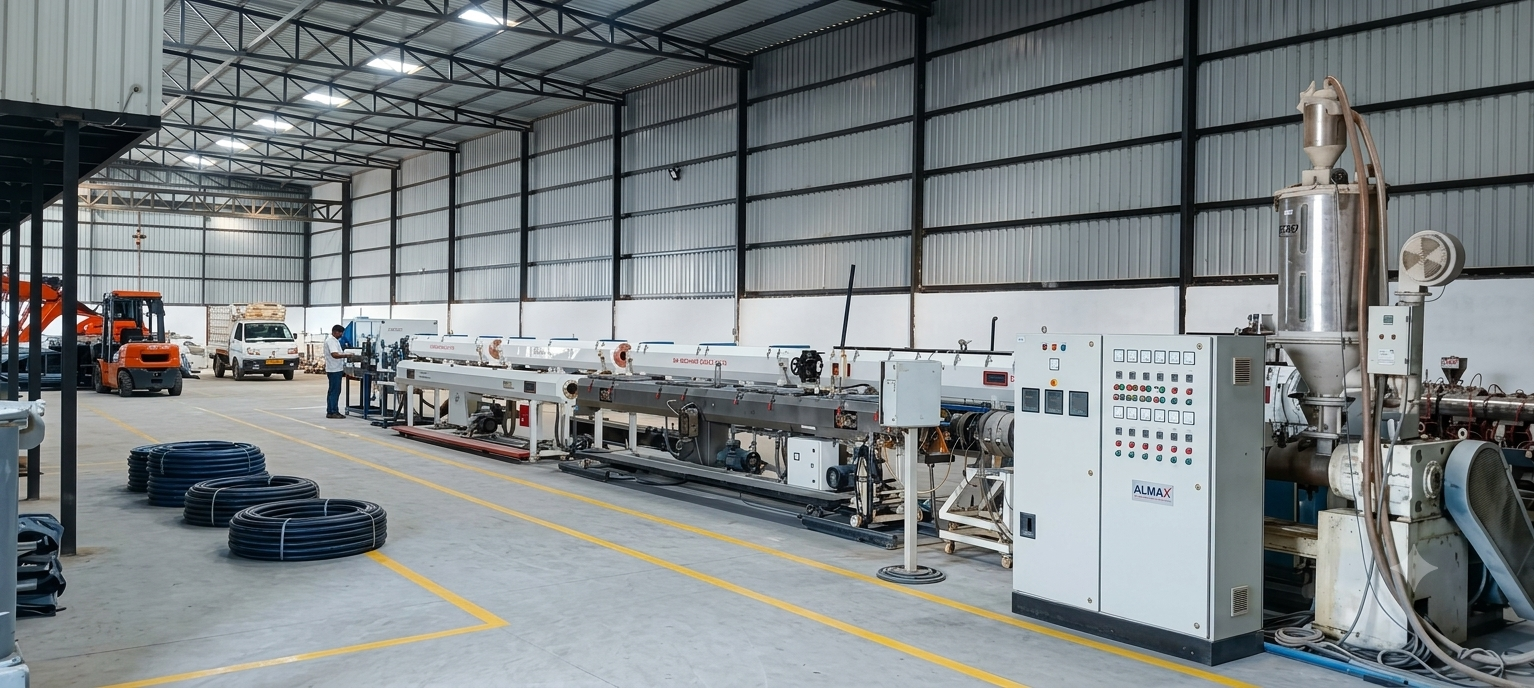
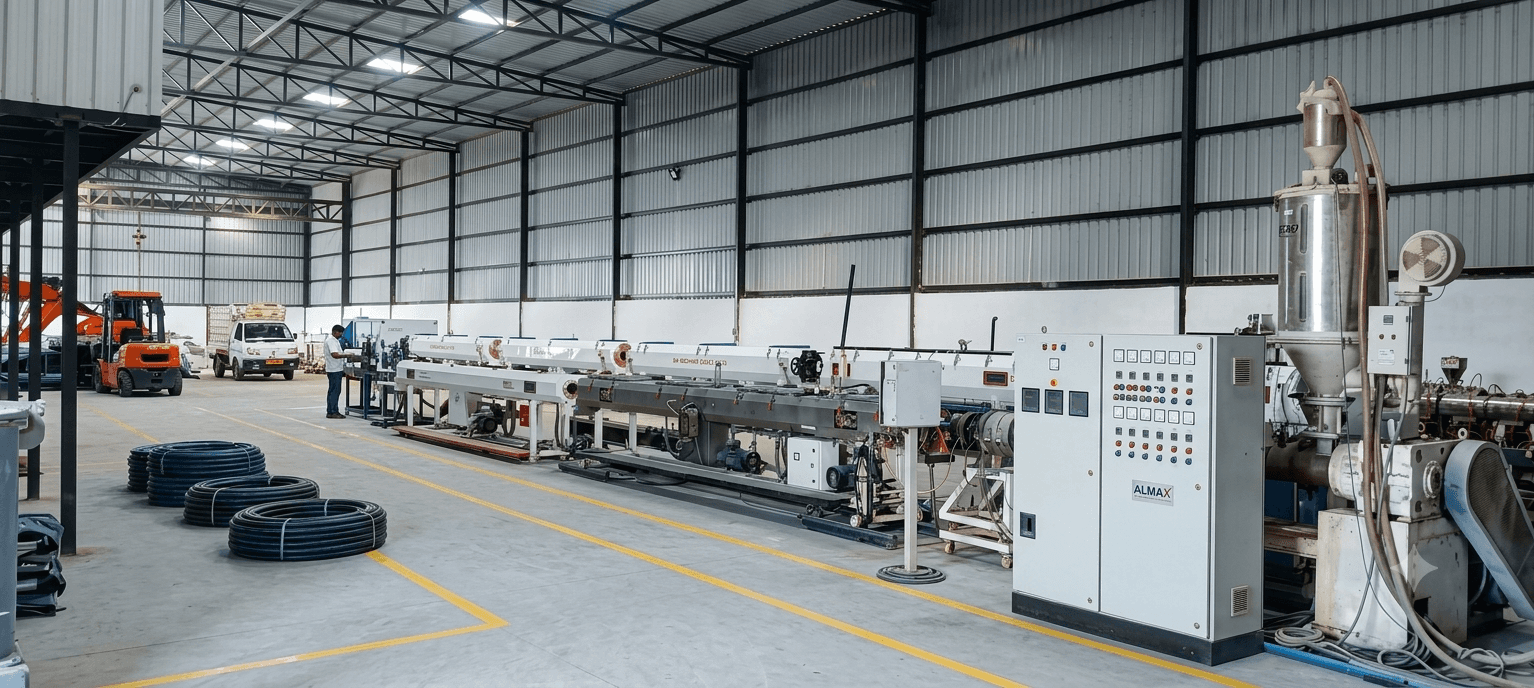
What to look for: multi-line extrusion machinery, raw material from HMEL/Reliance/GAIL/Borouge/Sabic with batch TCs, an in-house hydrostatic test rig per IS 12235, dimensional inspection setup, carbon black testing, and a documented QMS binder. Ask for the ISO 9001:2015 certificate.
Step 3: Match pressure class and material grade to service conditions
Rule of thumb for HDPE water pipes: PN 6 for gravity village distribution, PN 8-10 for standard distribution, PN 12.5-16 for pump discharge, PN 20-25 for industrial. PE 100 is the 2026 default; PE 80 only for lower-pressure. Add 10-15% safety margin on PN rating. Ask for the manufacturer's design calculation sheet.
Step 4: Insist on third-party inspection
For any order above 20 MT or government/EPC tender, insist on inspection by CIPET, RITES, SGS, PDIL, TÜV, Bureau Veritas or Crown Agents. Inspection should cover raw material TC, dimensional checks, hydrostatic pressure tests as specified in IS 4984, MFI, OIT and carbon black dispersion.
Step 5: Audit the tender documentation stack
Every JJM/PHED/PWD/Smart City shipment should arrive with: current BIS licence copy, batch-linked TC, raw material compound TC, third-party inspection release note, ISO 9001 certificate, GST invoice with e-way bill, weighment slip, and tender-specific annexures. Complete paperwork at dispatch helps avoid delays in releasing payments.
Step 6: Reference checks that actually work
Ask for three recent references within your state or sector — with contact person and phone — then call. Ask: Did material meet spec? Did it arrive on time? Was inspection coordination smooth? Any field joint failures? Would you order again? Serious JJM/PHED suppliers have multiple references; stalling is a warning.
Step 7: Evaluate logistics and plant location vs project geography
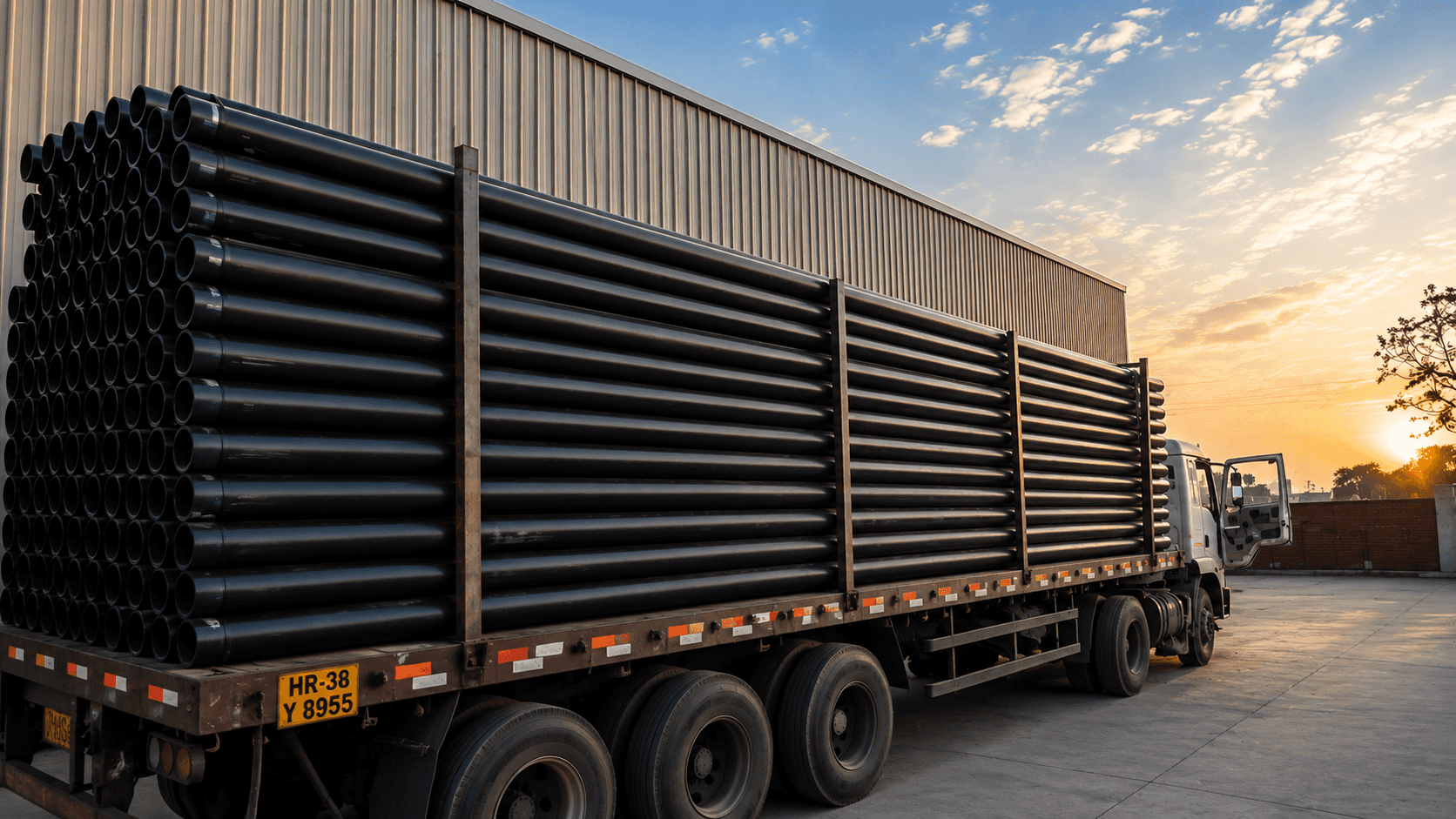
Freight and breakage costs climb quickly when pipe travels long distances. For projects in Delhi NCR, Haryana, UP, Punjab, Rajasthan, Uttarakhand, Himachal, J&K and Bihar, a Sonipat-corridor Haryana plant is usually within 2-14 hour road dispatch — cheaper and faster than sourcing from Gujarat, Maharashtra or South India.
Step 8: Red flags that should stop the deal
Walk away if: BIS licence cannot be shared; plant visit refused; price 20%+ below market; generic test certificates (same TC across consignments); unclear raw material sourcing; refusal to accept third-party inspection; no references in your state; no in-house hydrostatic rig; website shows only stock photos; rigid commercial terms refusing LC/PBG/staggered delivery.
Step 9: Commercial terms to negotiate
2026 standard terms: 30-50% advance for small orders, LC-at-sight or 30-day credit for repeat tender orders, PBG 5-10% for 12 months, retention 5% for 6 months post-installation, warranty 12-24 months. For large JJM/PHED tenders, phased dispatch over 4-12 months tied to site readiness. Include fuel/raw-material escalation clauses for schedules over 6 months.
Step 10: Red-flag spotting during delivery and installation
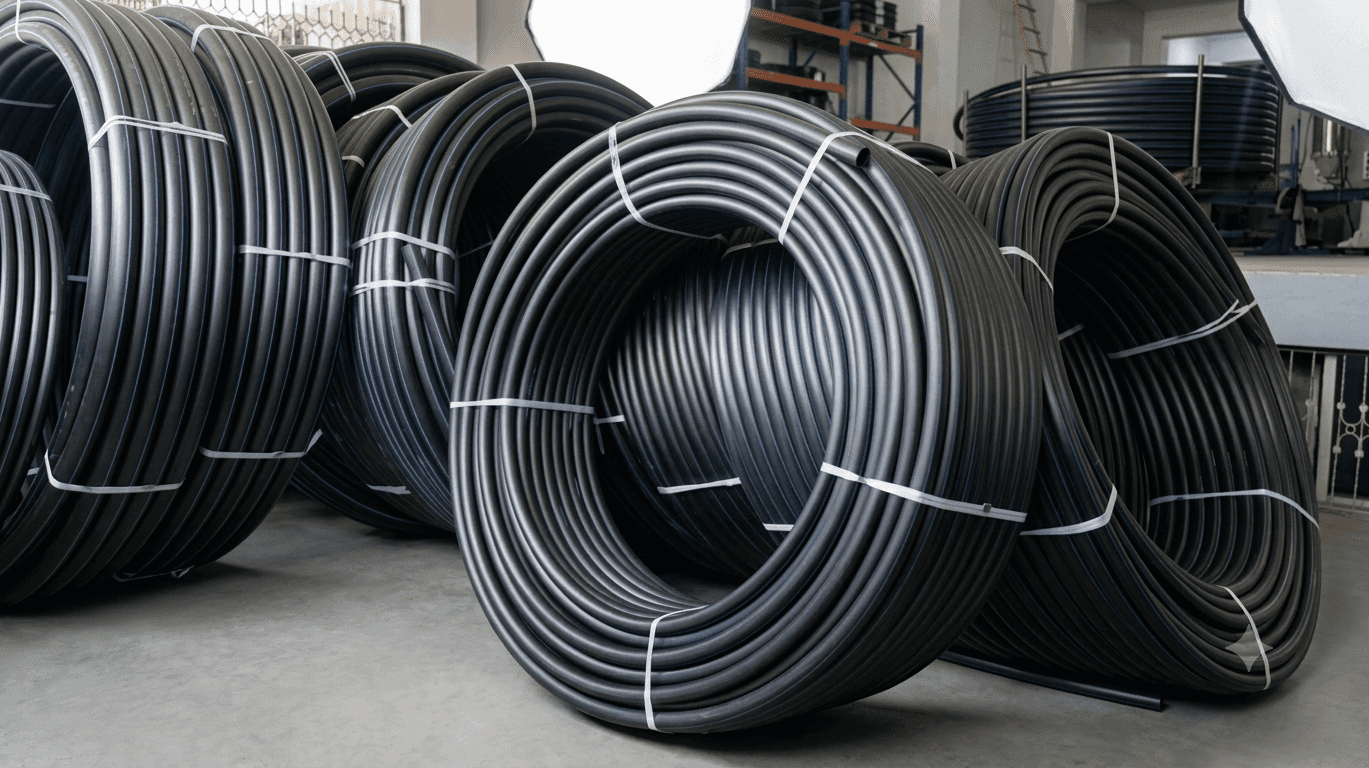
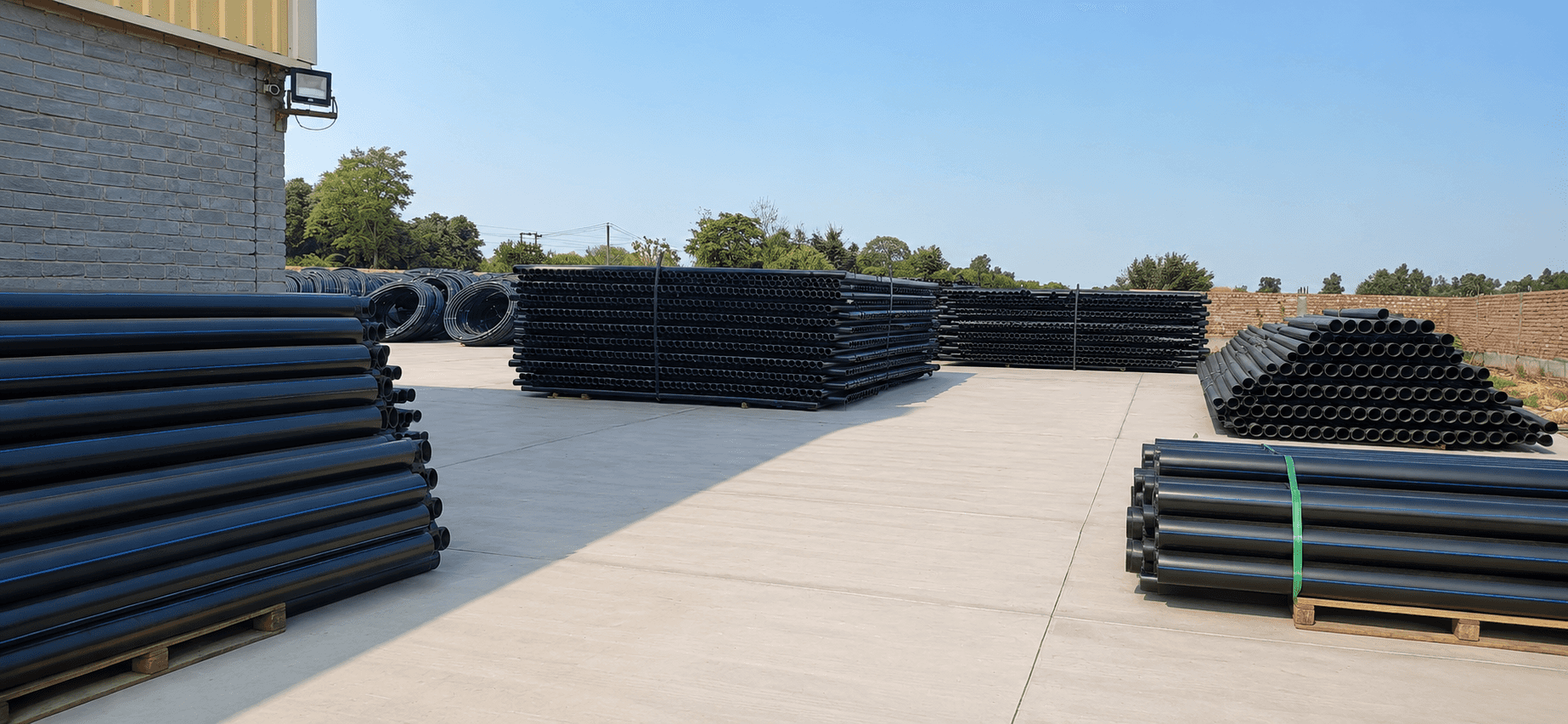
Keep checking: BIS mark printed every 1 metre with licence number, grade, dimension, PN, batch and manufacturer name; colour matches spec (potable-water HDPE is black with blue stripes, gas is yellow, PLB is black-outer-silicone-inner); wall thickness at multiple points matches IS; fusion parameters correct at joints; hydro-test installed sections before backfill (IS 4984 Clause 9.3).
Why Delhi NCR, Haryana and UP buyers increasingly choose regional manufacturers
A clear shift from pan-India brands to Haryana/Delhi NCR/Western UP regional specialists has occurred. Reasons: lower freight costs than shipping from western or southern India; 2-3 day road delivery vs 7-10 day rake freight; in-person site technical support within 24 hours; UP Jal Nigam, Haryana PHED, DJB and NCRPB readily empanel regional vendors; agile smaller manufacturers accept staggered LC and PBG terms national brands often decline.
The Almax Polymers checklist — why we're a safe shortlist
Almax Polymers Private Limited operates a BIS-certified facility at Sonipat, Haryana, with 10,000 MT annual capacity and 850 MT monthly output. Credentials: BIS licences for IS 4984:2016, IS 17425:2020, IS 12786:2024 and IS 4985; ISO 9001:2015; Category A rating by Crown Agents (UK), its highest quality band. In-house hydrostatic test lab. Inspection coordinated with CIPET, RITES, SGS, PDIL, Crown Agents. Clients include Tata Steel, L&T, Indian Oil, Delhi Airport, Jindal Steel, Powergrid, Konkan Railway, GR Infra, GVPR, JIL Information Technology, UHBVN and Uttar Pradesh Jal Jeevan Mission (JJM). Start at /request-quote or call our sales team.
Final word
Choosing an HDPE pipe manufacturer in 2026 is about verifiable certification, actual manufacturing capability, documentation discipline and honest commercial terms — not lowest quoted price. Saving money by cutting corners at procurement often ends up costing more in field repairs later. Use the framework above against your shortlist; your HDPE network will quietly deliver for the full 50-year design life.