Handling and unloading
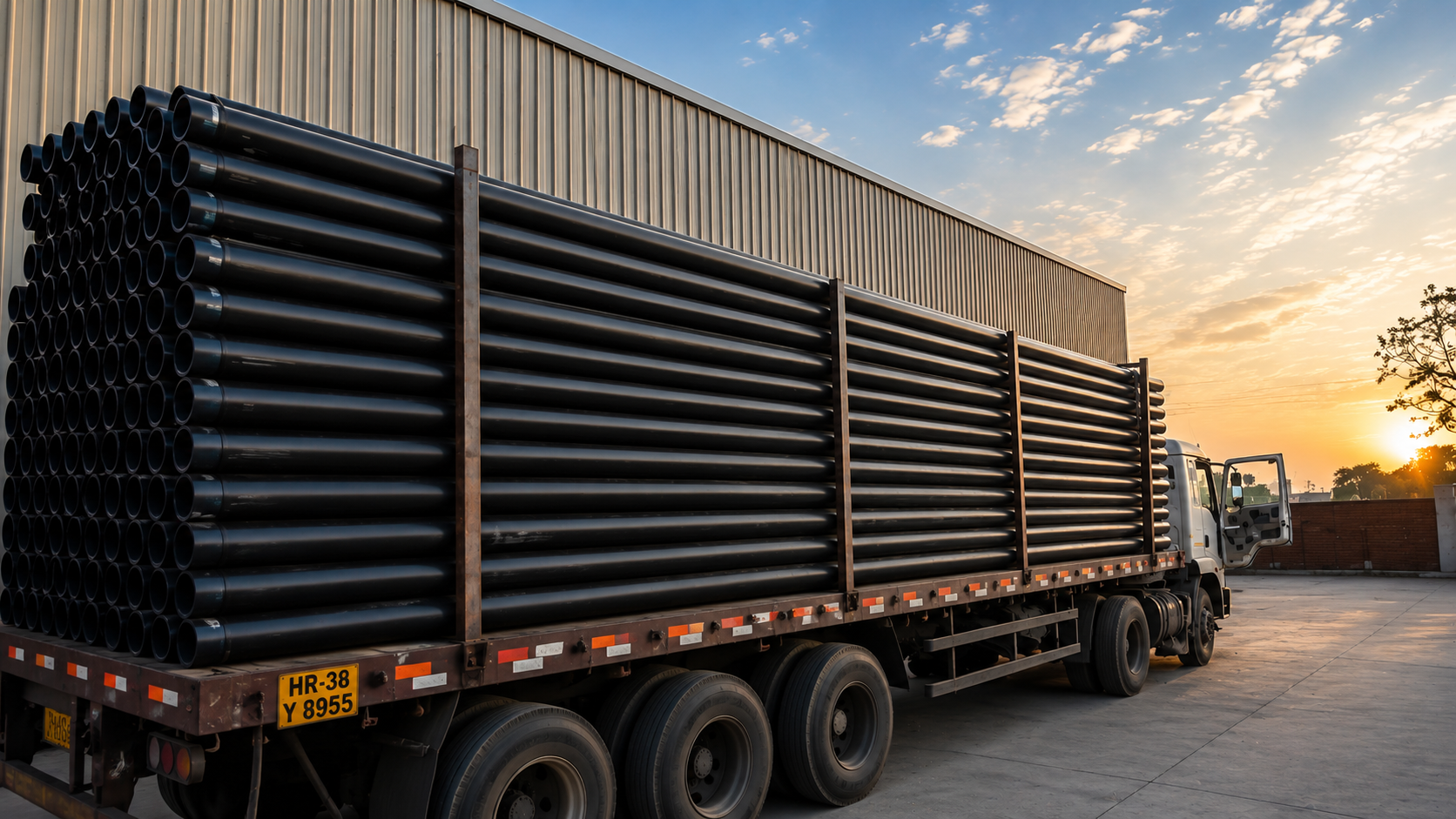
Use webbing slings, avoid steel chains. Pad forklift tines. Never drop pipes from vehicles — impact can cause hairline cracks in cold weather.
Storage on site
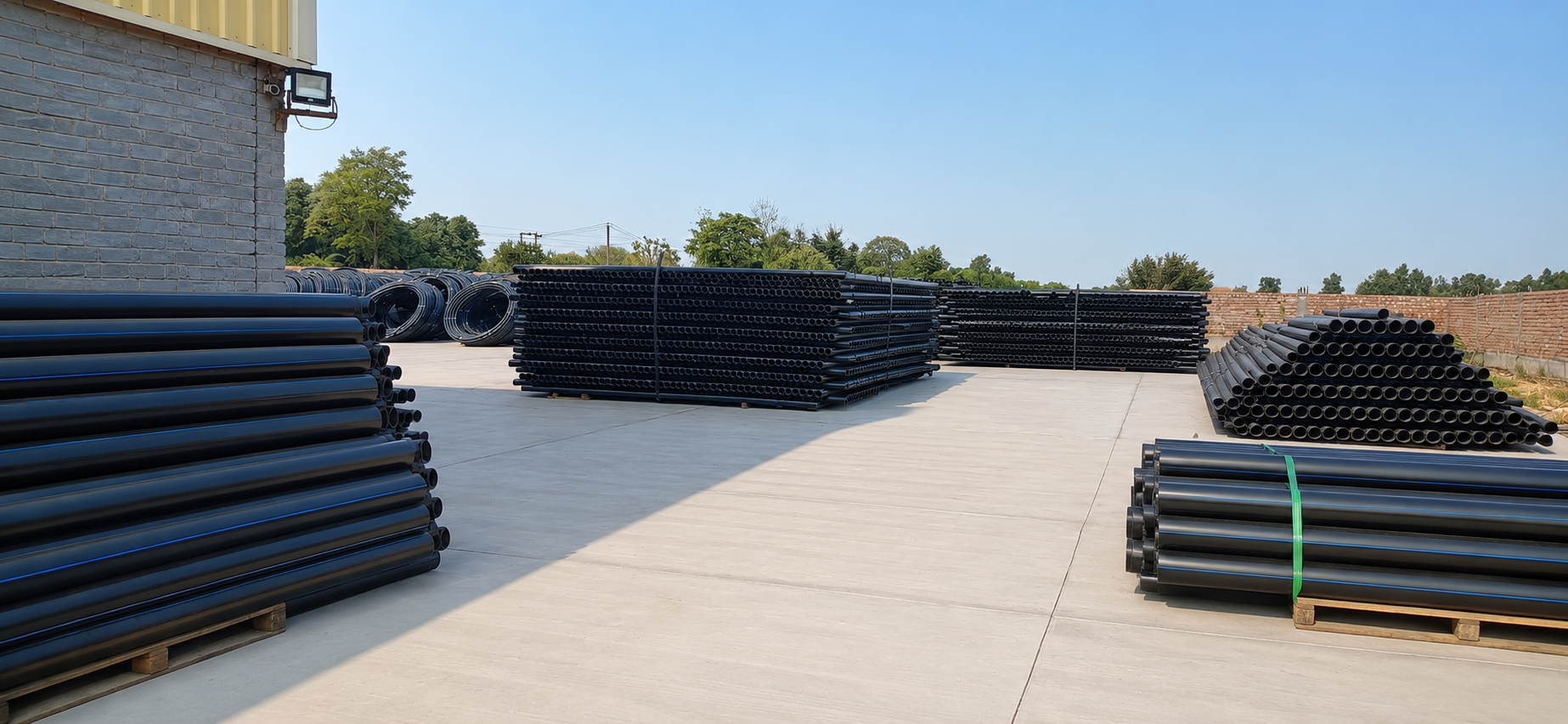
Store on flat ground, stack heights below 1.5 m for large sizes. Support wooden dunnage under each layer. Cover with UV-shielded tarpaulin for storage exceeding 6 months.
Trenching
Trench width = OD + 300 mm minimum. Depth below frost line and traffic load per soil-mechanics design. Bedding: 100 mm sand or fine soil, well compacted.
Jointing
For OD ≥ 90 mm: butt fusion by trained operator with calibrated fusion machine. For smaller sizes: electrofusion couplers. Every joint should be recorded in a fusion log with operator ID, pressure, temperature and cool time.
Laying and backfill
Lay pipe on prepared bedding. Backfill with sand/fine soil to 300 mm above the crown. Compact in 150 mm layers. Avoid stones larger than 25 mm in initial backfill.
Hydrostatic testing
After joint cooling (minimum 4 hours for butt fusion), fill with water, purge air, and pressurise to 1.5 x working pressure for 30 minutes. Check for pressure drop and visible leaks.
Common mistakes to avoid
Rushing fusion cooling time. Using non-calibrated fusion equipment. Backfilling with stony soil. Skipping hydrostatic testing. Not recording joint fusion logs — which are audit evidence for warranty claims.