Why Uttar Pradesh is one of India's biggest HDPE pipe markets
Uttar Pradesh is India's most populous state, and its drinking-water, drainage and telecom programmes use HDPE pipes on a very large scale. Under the Jal Jeevan Mission (Har Ghar Jal), village piped-water schemes across all 75 districts rely mainly on HDPE pipes for distribution networks because the pipe is light, flexible, corrosion-free and joined by fusion welding that does not leak. Large regional schemes in Bundelkhand and the Vindhya region, city water and sewer projects in Lucknow, Kanpur, Varanasi, Prayagraj and Agra, and BharatNet fibre routes add further demand. For a buyer in Lucknow or anywhere in UP, this means plenty of suppliers — and a real need to tell good pipe from bad.
Who buys HDPE pipes in Lucknow and UP
Typical buyers include EPC contractors executing Jal Jeevan Mission and UP Jal Nigam works, civil contractors on Smart City and municipal drainage projects, builders and plumbing contractors in growing Lucknow sectors such as Gomti Nagar Extension, Sushant Golf City and the Sultanpur Road and Kanpur Road corridors, industrial units in Kanpur, Unnao and the Noida–Ghaziabad belt, and telecom contractors laying optical fibre. Each group has different priorities: tender buyers need flawless paperwork, builders need reliable delivery dates, and industrial buyers need the right grade for their fluid.
Step 1: Know the standard your project requires
For drinking-water HDPE pipes, the governing standard is IS 4984:2016. Fibre ducts follow IS 17425:2020 for PLB ducts, and drainage DWC pipes follow IS 16098. Most UP tender documents name the exact standard, material grade (PE 80 or PE 100) and pressure class (PN rating) in the bill of quantities. Read these lines carefully before you ask for a quote — a quote for the wrong grade or class is the most common cause of rejected material at site.
Step 2: Choose the right PE grade and PN class
PE 100 is the modern default for water supply because it handles the same pressure with a thinner wall than PE 80, saving material weight. For village distribution networks fed by an overhead tank, PN 6 is common; PN 8 to PN 10 is typical for larger distribution lines; and rising mains from pumps usually need PN 10 to PN 16 depending on pump head. In flat central and eastern UP, pressures are generally moderate, but rising mains and long trunk lines still need careful design. Always follow the design approved by the department or your consultant — and add a safety margin rather than choosing the lowest class that just meets the calculation.
Step 3: Check the BIS licence and pipe marking
Ask the supplier for their BIS licence number and verify it on the BIS website or the BIS Care app: confirm the licence is active and covers the standard, grade and sizes you are buying. When pipes arrive, check the printed marking along the pipe. It should show the manufacturer's name or brand, the BIS Standard Mark with licence number, the IS standard, size, material grade, pressure class and batch or date of manufacture. Pipes without clear, continuous marking should not be accepted on a tender site.
Step 4: Plan third-party inspection early
Many UP tenders require inspection of pipes before dispatch by an approved third-party agency. The department or project management consultant usually names the acceptable agencies. Book the inspection as soon as production is confirmed, because waiting for an inspector is one of the main reasons trucks are delayed at the plant. A manufacturer with an in-house test laboratory can complete the hydrostatic, dimensional and material tests that inspectors witness without sending samples elsewhere.
Step 5: Get the paperwork right with every truck
For Jal Jeevan Mission and UP Jal Nigam works, each consignment should normally carry the GST invoice, e-way bill, the manufacturer's test certificate for the batch, a copy of the BIS licence and, where required, the third-party inspection release note. Keep a set of copies at the site office. Missing or mismatched documents are a frequent cause of material being held at site and of delayed contractor bills.
Step 6: Plan freight and delivery to your UP district
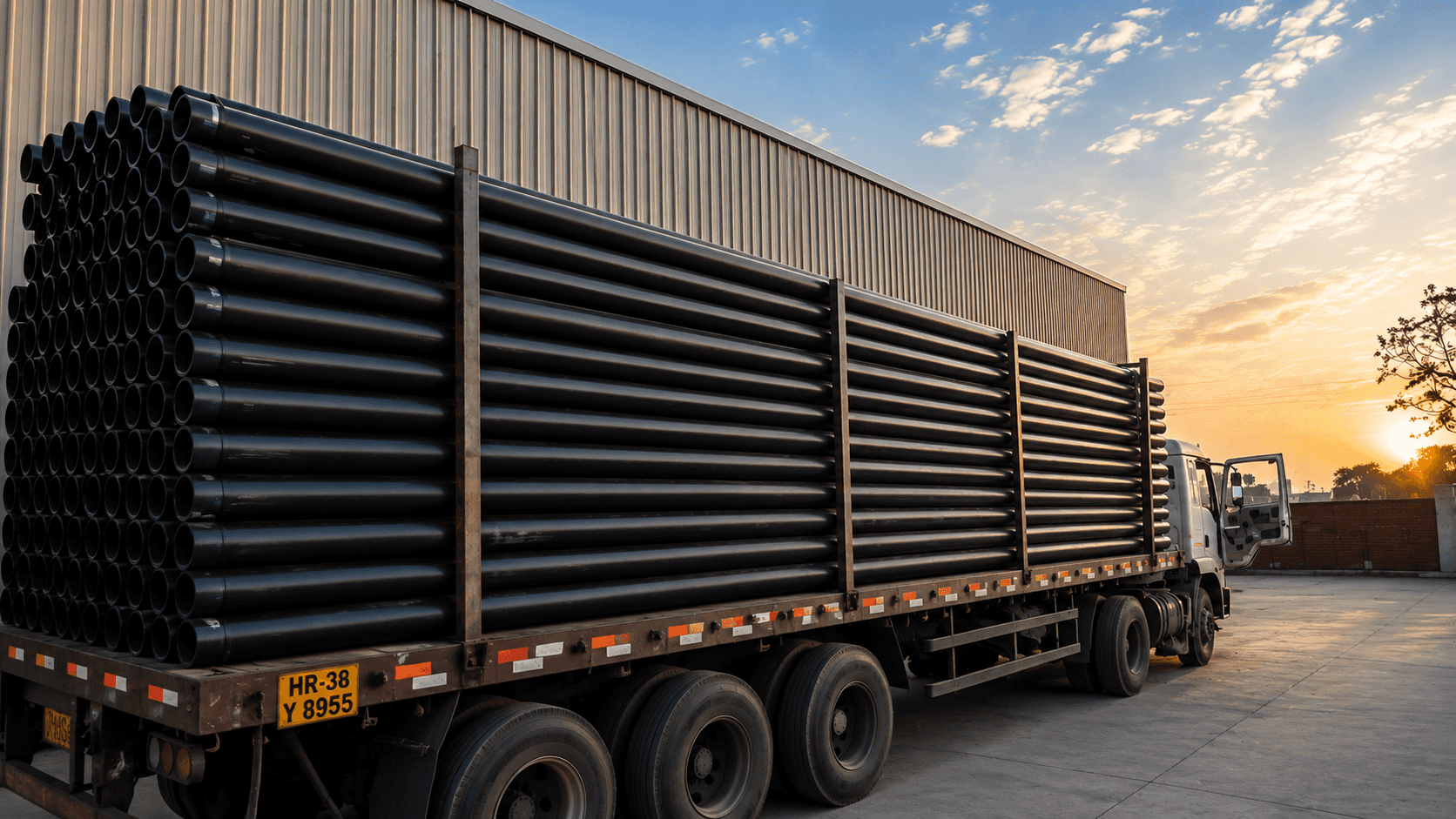
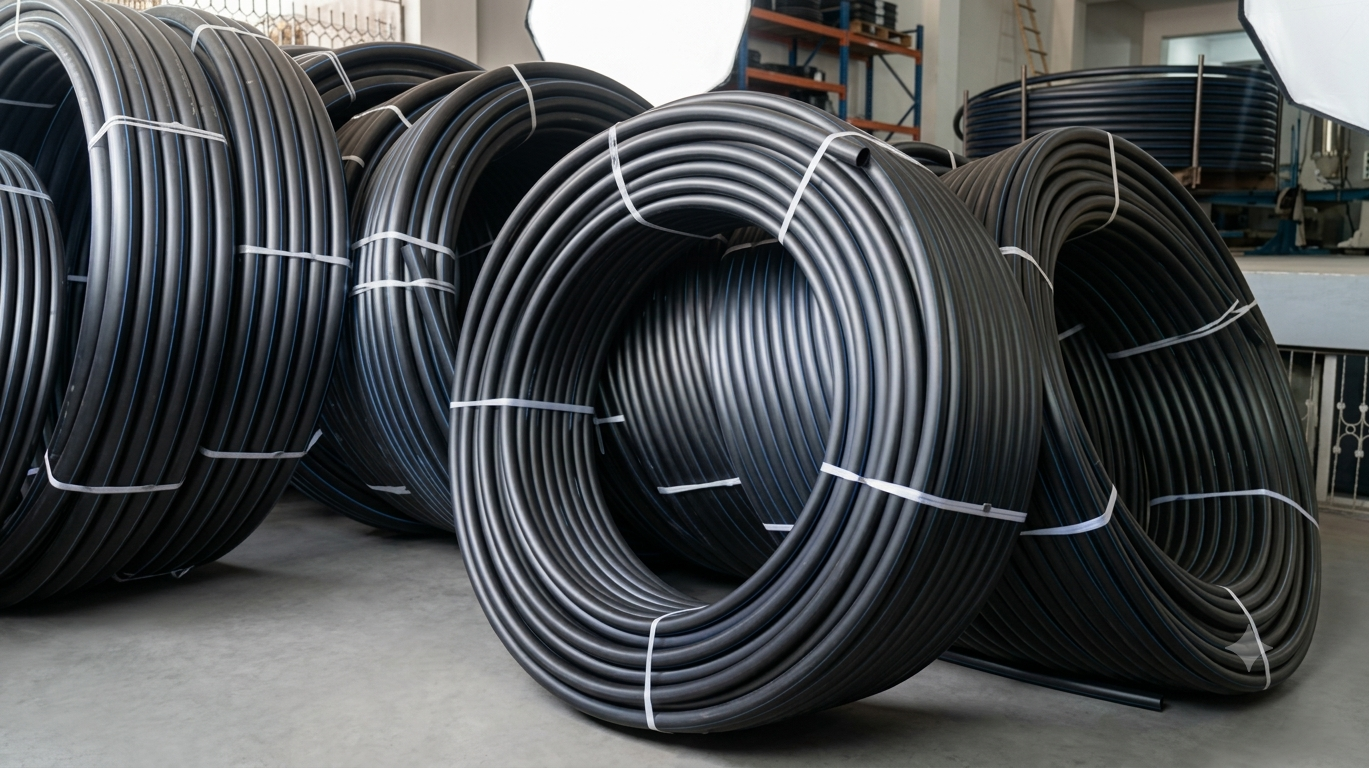
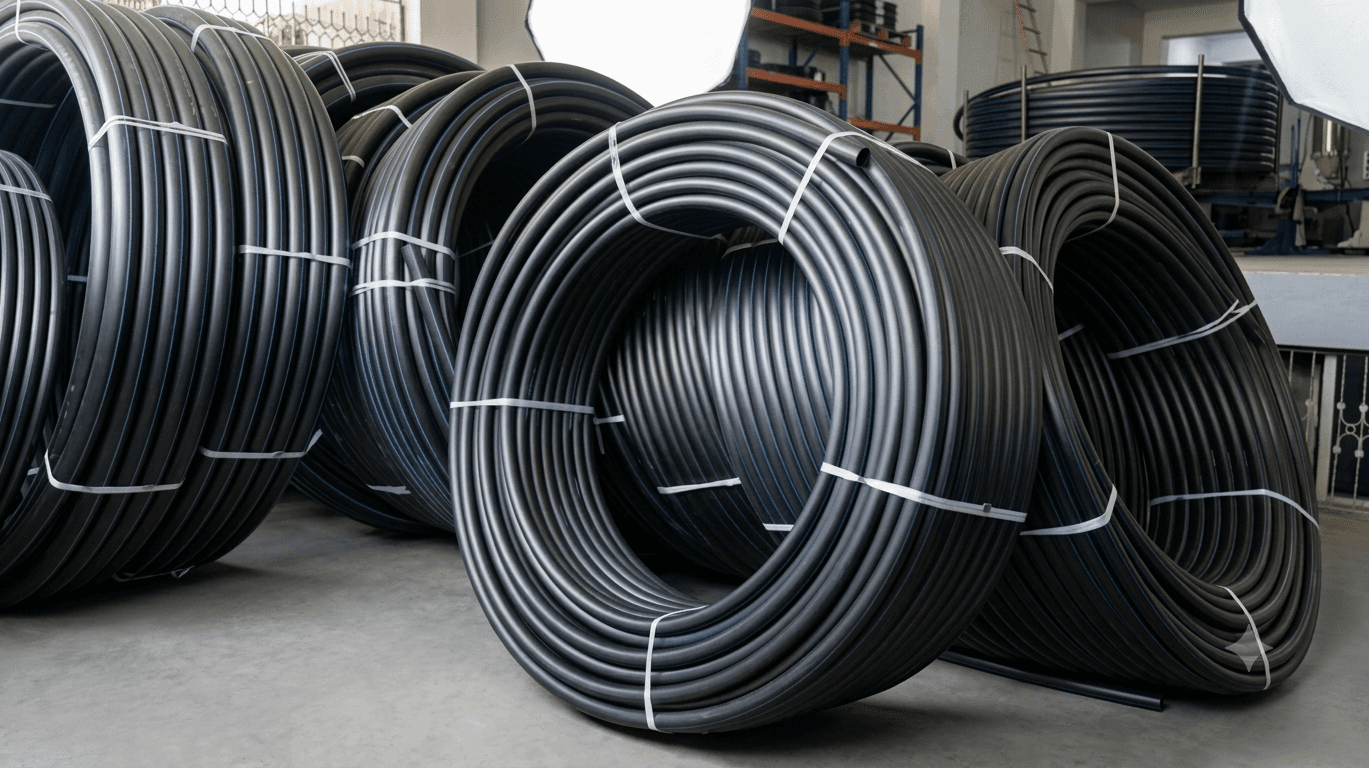
HDPE pipe is bulky but light, so freight is charged mainly by truck rather than by weight. Full truckloads give the lowest freight cost per metre. Smaller sizes up to about 110 mm are usually supplied in coils, which load efficiently and reduce the number of joints on site; larger sizes are supplied in straight lengths. With the Yamuna, Agra–Lucknow and Purvanchal expressways, road delivery from Haryana to Lucknow, Kanpur and eastern UP districts is now fast and predictable. For phased tender work, ask the supplier to schedule dispatches to match your work programme so pipes do not lie in the sun at site for months.
Step 7: Store and lay the pipes correctly
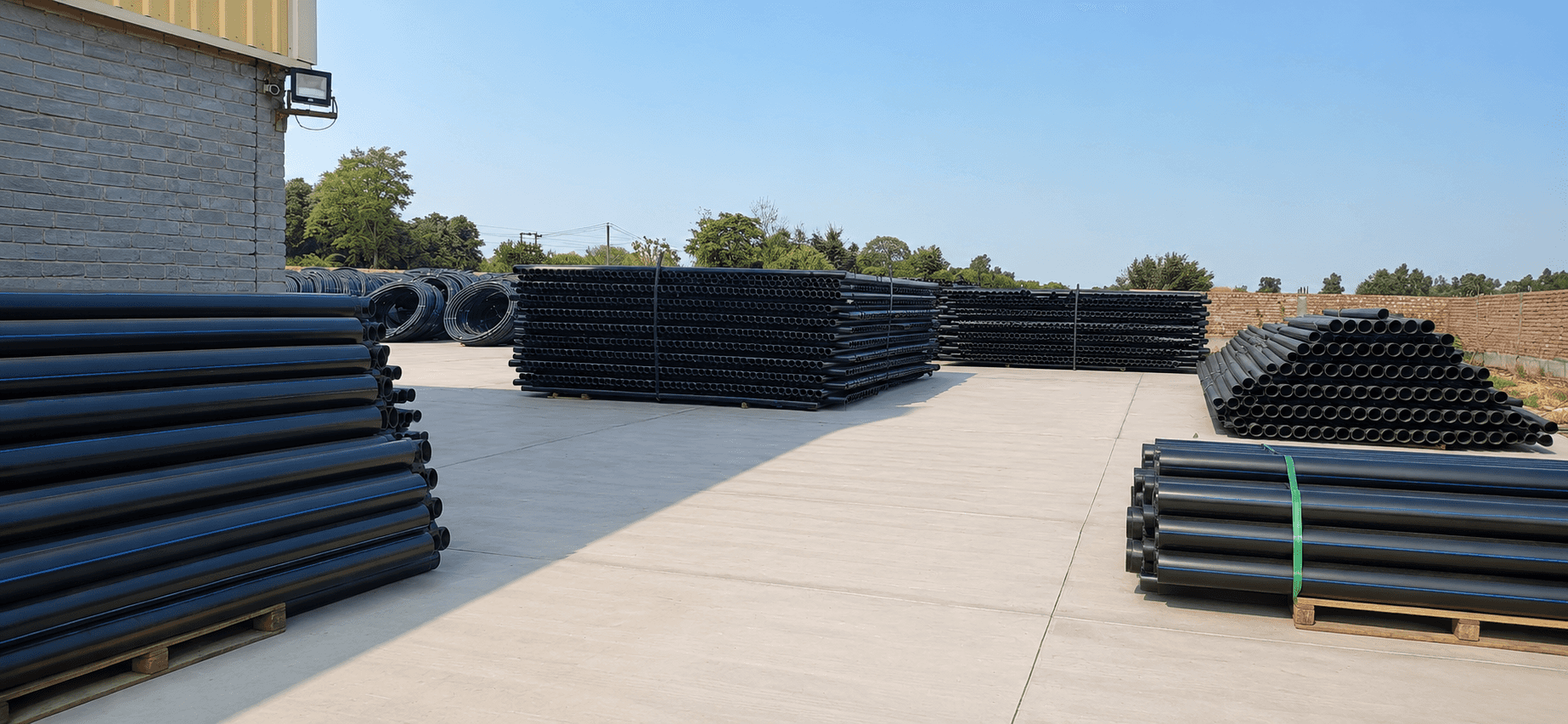
Store pipes on level ground, away from sharp objects, and stack straight lengths to a safe height. Keep coils flat. HDPE pipes made with carbon black resist UV, but long storage in direct summer sun is still best avoided. During laying, use trained fusion operators and the correct fusion parameters for the pipe size and wall thickness, protect the pipe from stones in the trench bed, and pressure-test each section before backfilling. Most field leaks come from poor jointing or bedding, not from the pipe itself.
Red flags to watch for in the UP market
Be cautious if a price is far below the market rate, if the supplier cannot show an active BIS licence covering your size and grade, if test certificates look identical across different batches, if the pipe surface is rough or the wall thickness varies around the circumference, or if the supplier refuses third-party inspection. Recycled material in pressure pipes may pass a visual check but fail early under pressure, so these checks protect both your project and your reputation with the department.
Lucknow, Kanpur, Varanasi and beyond — city notes
In Lucknow, demand is a mix of township development, city drainage and surrounding rural water schemes. Kanpur adds strong industrial demand for process-water and effluent lines, where HDPE's chemical resistance is valuable. Varanasi and Prayagraj see drainage and riverfront-area works, while Agra, Aligarh, Meerut and the western UP belt are closer to the NCR and receive faster deliveries from Haryana. Jhansi and the wider Bundelkhand region have large pipeline-based drinking-water schemes where long distribution networks make jointing quality especially important.
How Almax Polymers supports UP buyers
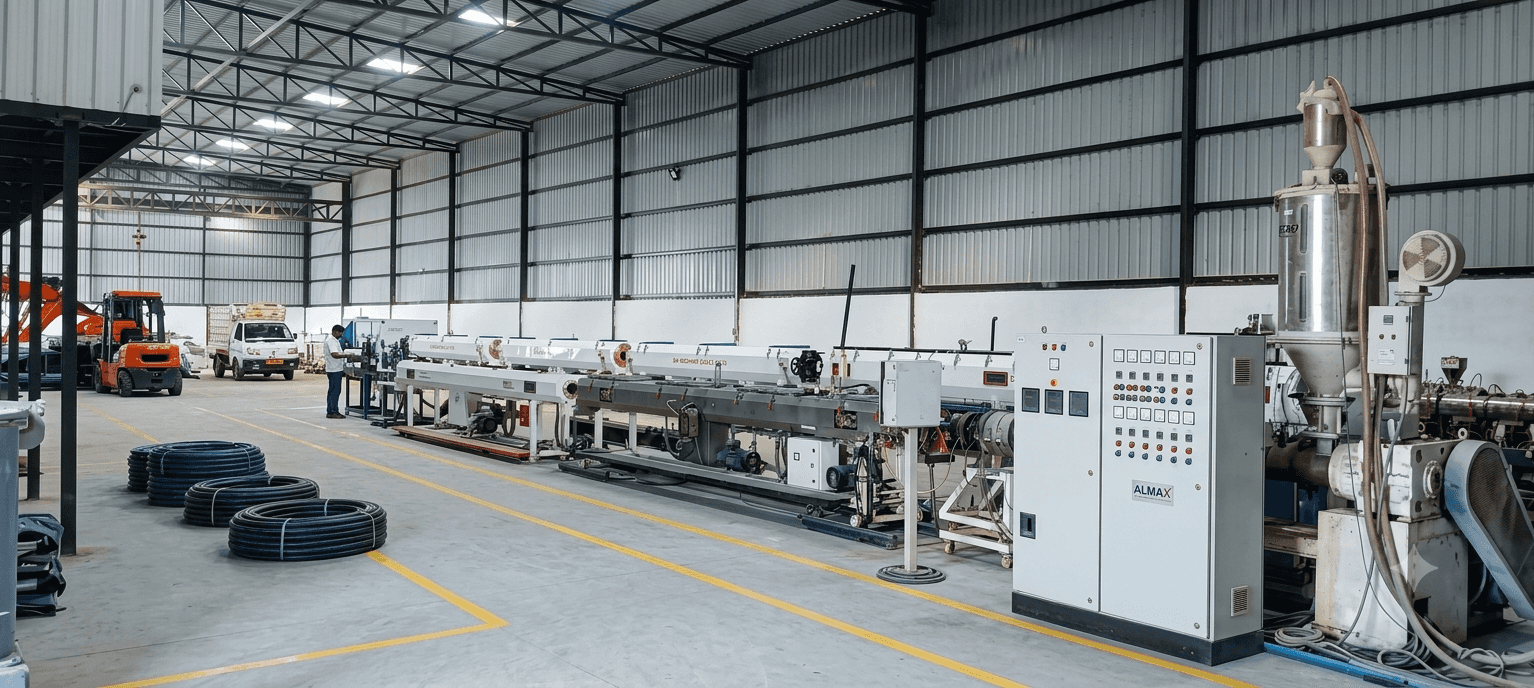
Almax Polymers Private Limited manufactures BIS-certified HDPE pipes to IS 4984:2016, along with PLB ducts, DWC pipes, sprinkler pipes, Rigid PVC and PPR pipes, at its plant in Sonipat, Haryana. The company holds ISO 9001:2015 certification and a Category A rating from Crown Agents, runs an in-house testing laboratory and coordinates third-party inspection when required. Uttar Pradesh Jal Jeevan Mission is among the clients Almax has served. Every dispatch carries batch test certificates and BIS licence copies, and trucks reach Lucknow, Kanpur and other UP districts by road via the expressway network.
Getting a quote for your Lucknow or UP project
To get an accurate quote quickly, share your bill of quantities or a list of sizes, grade (PE 80 or PE 100), PN class, quantities in metres, delivery district and whether third-party inspection is required. You can use the Request Quote page on our website, email info@almaxpolymers.com or call or WhatsApp our sales team on +91 87966 26440. You can also read our city pages for Lucknow, Kanpur, Varanasi, Prayagraj, Agra, Noida and Ghaziabad for local delivery information.