Potable water distribution
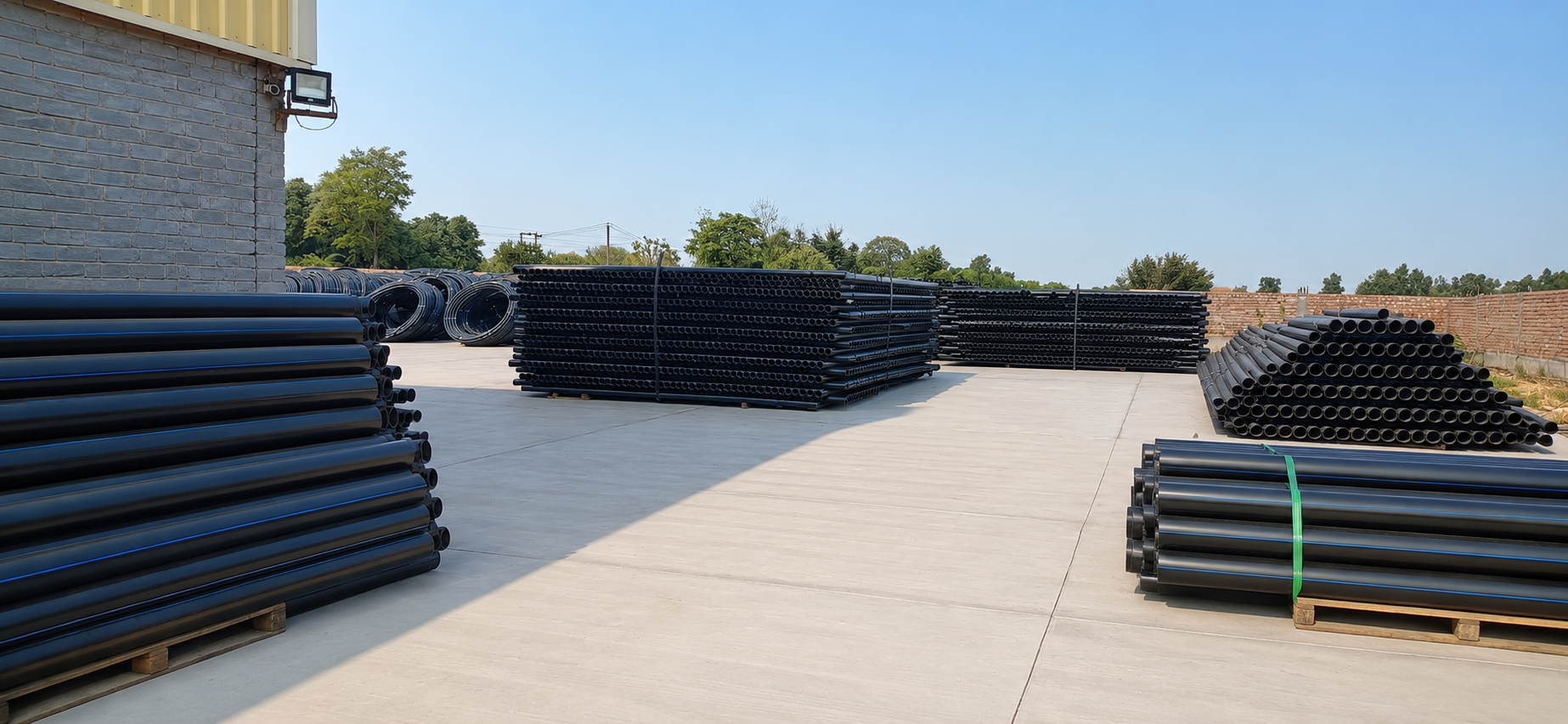
HDPE is the default choice for potable water distribution in rural and urban schemes. Conforming to IS 4984:2016, HDPE pipes carry treated water from ground-level reservoirs and elevated tanks to households in the Jal Jeevan Mission village networks. Zero-leak fusion joints, corrosion immunity and 50-year design life have made HDPE the material of choice from village-level lateral lines to zonal trunk mains.
Sprinkler and drip irrigation
HDPE sprinkler pipes conforming to IS 14151 form the backbone of PMKSY (Pradhan Mantri Krishi Sinchayee Yojana) and state agriculture schemes. Portable, quick-coupled sprinkler pipes allow one operator to cover several hectares. HDPE laterals feed drip emitters for high-value crops. Water savings of 30–50 percent versus flood irrigation are documented for well-designed HDPE-based schemes.
Gas distribution
Medium-Density Polyethylene (MDPE) pipes conforming to IS 14333 are the standard for city gas distribution networks (CNG/PNG). Yellow-striped MDPE is used for underground gas mains and service connections. Fusion-jointed, leak-proof and immune to corrosion, MDPE gas pipes are safer and longer-lasting than steel for low-pressure distribution.
Sewerage and drainage
HDPE Double-Wall Corrugated (DWC) pipes conforming to IS 16098 (Part 2) are increasingly replacing RCC and stoneware pipes for underground sewerage and stormwater drainage. Lightweight, root-resistant, high ring stiffness (SN 4 / SN 8) and rubber-gasket leak-proof joints make DWC ideal for urban and highway drainage.
Telecom OFC ducting
PLB (Permanently Lubricated) HDPE ducts — conforming to IS 14930 (Part 2) and TEC/GR/TX/CDS-008 — carry optical fibre cables across BharatNet, BSNL, RailTel and private OFC networks. The integral silicone inner layer enables cable blowing over 2 km at a stretch, dramatically reducing installation labour and time.
Industrial process piping
HDPE’s chemical inertness makes it the preferred choice for industrial water, effluent, brine, chlorine solutions, ferric chloride, dilute acids and alkalis. Chemical plants, water treatment plants and cooling water networks routinely use HDPE for corrosive fluid transport.
Mining slurry and tailings
HDPE pipes with high abrasion resistance are used for iron ore, coal, bauxite and copper slurry transport. Rotable HDPE pipe sections allow operators to rotate pipes 120° periodically to distribute wear evenly — extending service life by 2–3x.
Marine and outfall
HDPE pipes are used for seawater intake, brine discharge and sewage outfalls thanks to their resistance to saltwater and marine growth. Floating and submerged HDPE pipelines are laid with weighted concrete collars — avoiding costly seabed anchoring.
Cable and duct protection
HDPE ducts protect electrical power cables, control cables and instrumentation cables in industrial plants, highways and power projects. Colour-coded HDPE ducts allow easy identification of cable circuits during maintenance.
Where Almax fits
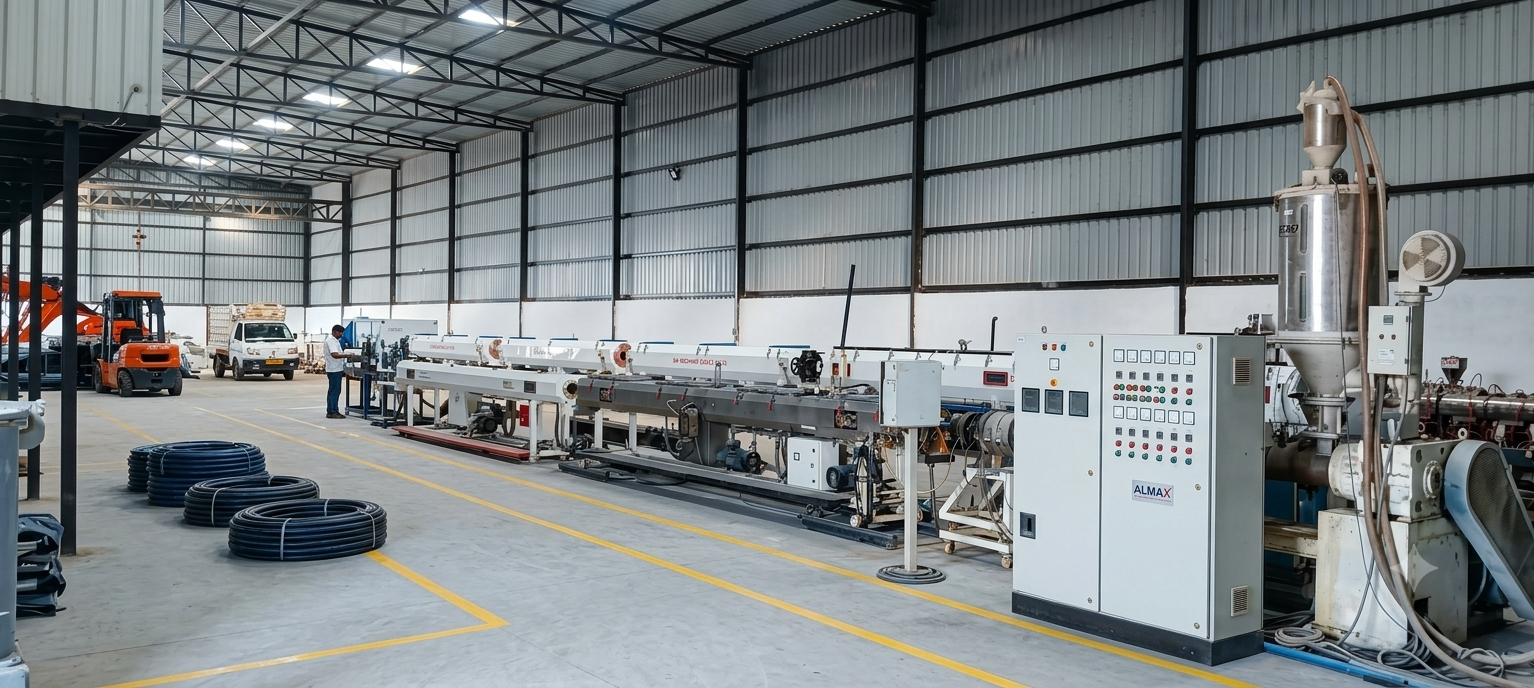
Almax Polymers manufactures HDPE pipes for water supply, sprinkler irrigation, telecom PLB ducting, sewerage DWC, industrial and general-purpose applications. Every product line is BIS-certified, tested in-house, and open to third-party inspection — supplied across India for government, infrastructure and industrial customers.