The materials on the table
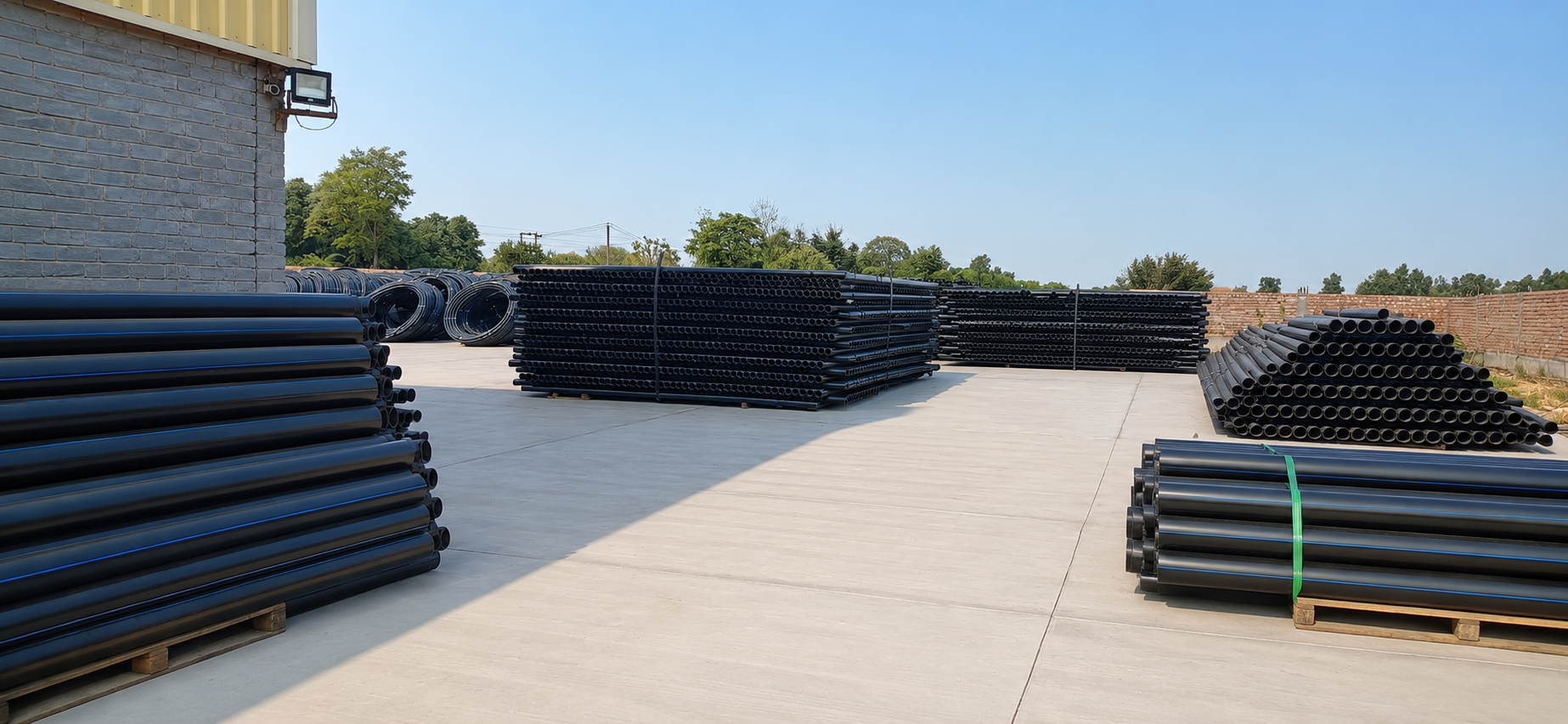
For a modern water supply network, engineers typically evaluate HDPE, Ductile Iron (DI), PVC-O (oriented PVC), uPVC and Galvanised Iron (GI). Each has a role, but the balance has shifted decisively toward HDPE for most modern rural and urban water supply projects — including Jal Jeevan Mission trunk mains and distribution.
Corrosion and lifetime
GI and steel pipes corrode within 8–15 years in Indian ground conditions, especially in coastal and saline belts. DI pipes have a longer service life (30–50 years) but their internal cement lining can deteriorate and their heavy weight increases installation cost. HDPE is corrosion-immune — no scaling, no tuberculation, no electrolytic corrosion — with a documented 50-year design life.
Leakage and non-revenue water
Non-Revenue Water (NRW) in Indian utilities averages 35–40 percent — largely driven by joint leakage in metallic and gasketed pipelines. HDPE’s heat-fusion joints are monolithic — the joint is stronger than the pipe. Utilities that have converted trunk mains to HDPE have reported NRW reductions of 8–15 percent, translating to massive operating cost savings.
Water quality preservation
HDPE conforming to IS 4984:2016 is food-grade and does not leach chemicals into treated water. It does not support biofilm as much as unlined metal pipes. Chlorine residual is preserved better in HDPE distribution networks, meaning fewer dosing points and lower chemical cost for the utility.
Seismic and soil movement resilience
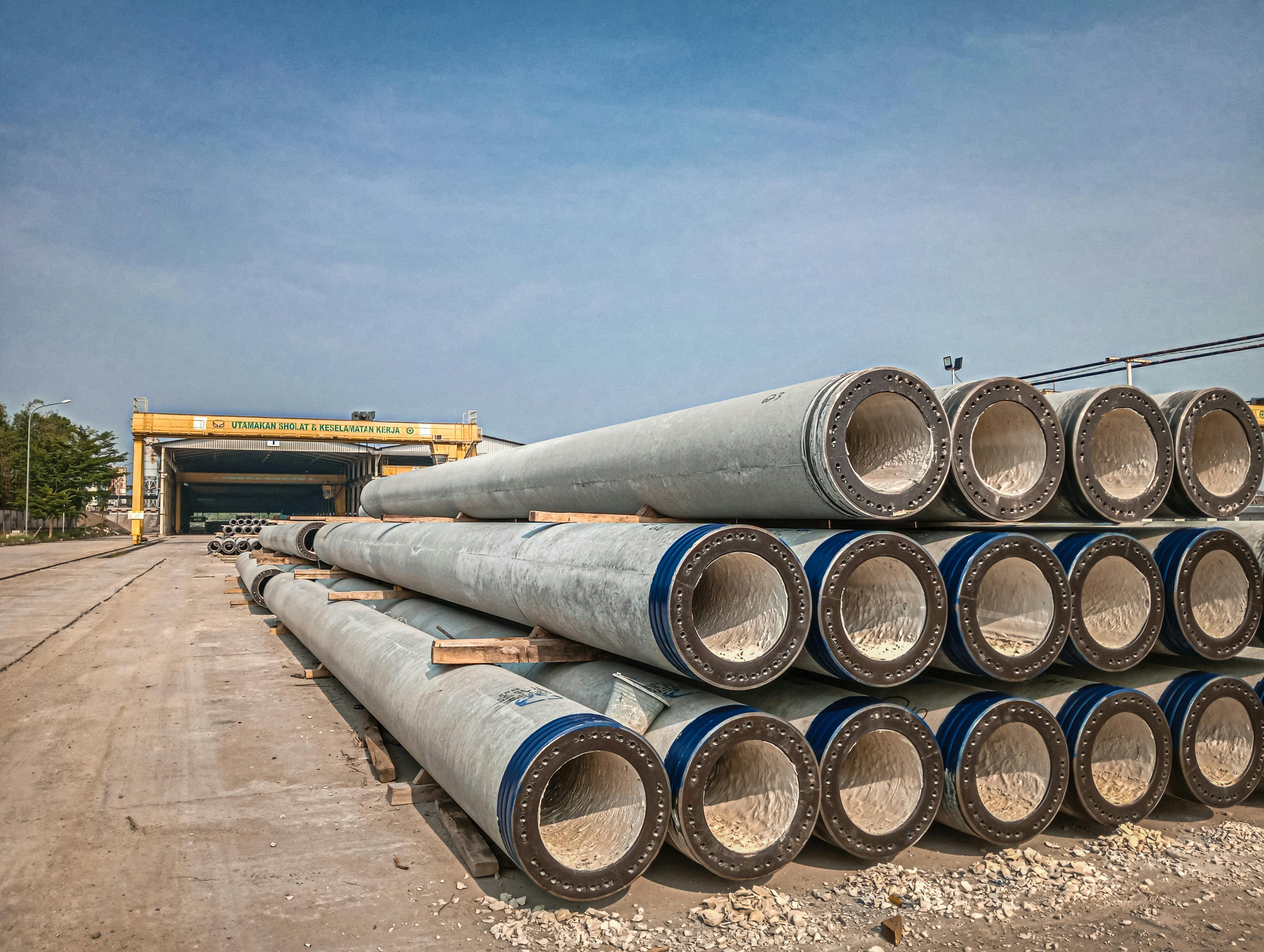
HDPE’s flexibility (2–3 percent elongation at yield) allows it to absorb differential ground settlement, seismic movement and vehicular vibration without failure. Rigid pipes (DI, GI, RCC) crack under the same movement. For projects in seismic zones IV and V — much of Himachal, Uttarakhand, Ladakh, North-East, Gujarat — HDPE is the safer specification.
Installation cost
HDPE pipes are 4–6 times lighter than DI pipes of equivalent capacity, dramatically reducing crane, transport and manpower cost. Coiled small-diameter HDPE eliminates hundreds of joints per kilometre. HDD (Horizontal Directional Drilling) with HDPE allows crossings of roads, canals and railways without open excavation.
When DI still wins
For large-diameter (600 mm and above) transmission mains at very high pressures, DI can be technically preferred. For above-ground bridge crossings with fire risk, DI or steel is safer. For most below-ground distribution networks in India today, HDPE is the correct choice.
Specification checklist for a water supply tender
Standard: IS 4984:2016. Grade: PE 100 preferred for trunk mains, PE 80 acceptable for distribution. PN rating: PN 6 or PN 10 depending on head. Third-party inspection: CIPET or RITES mandatory for government schemes. Fittings: matching grade and PN, from BIS-licensed manufacturers. Jointing: butt fusion for OD ≥ 90 mm, electrofusion for smaller sizes. MTC and BIS marking mandatory.
How Almax supports water supply projects
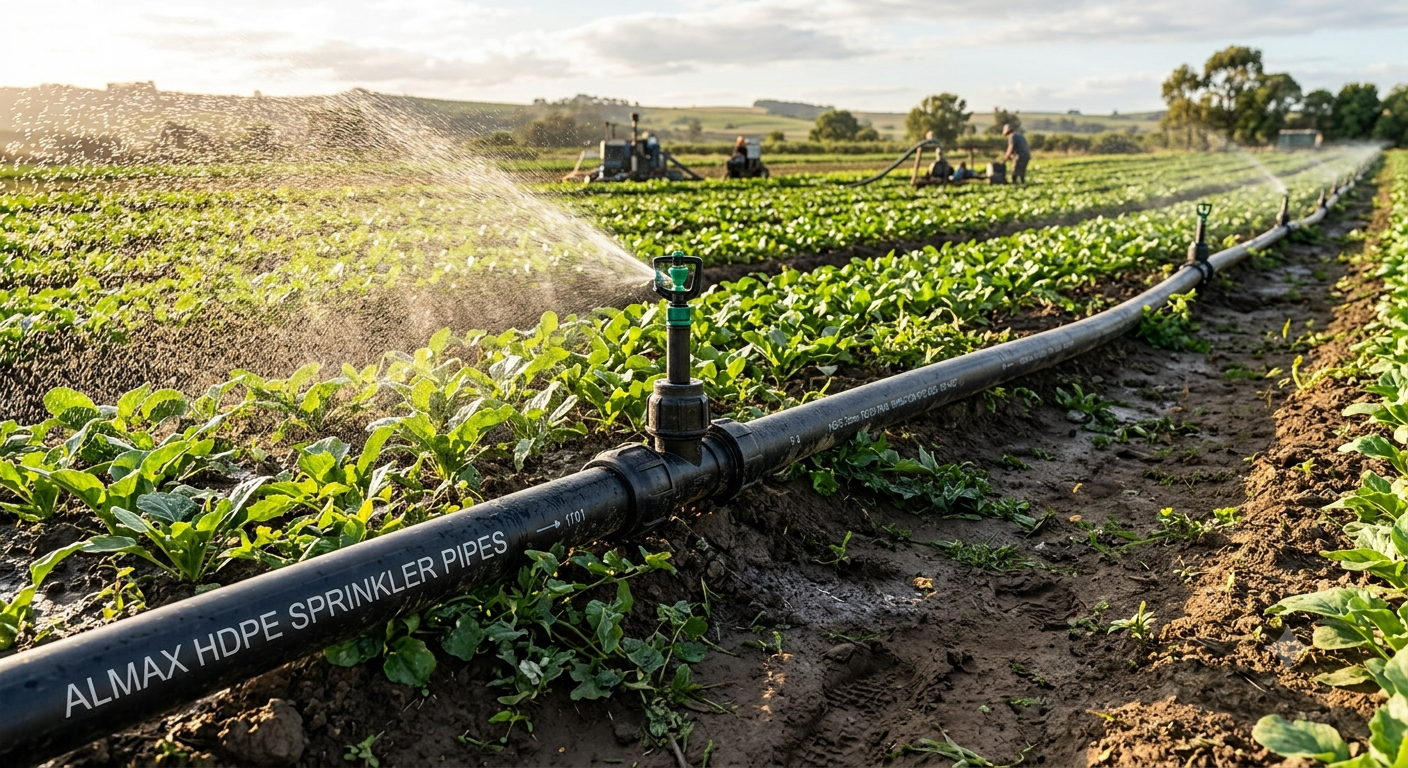
Almax Polymers supplies BIS-certified HDPE pipes to Jal Jeevan Mission, PHED, urban local bodies and Smart City projects across India. Our production capacity of approximately 10,000 MT annually, combined with third-party inspection readiness by CIPET, RITES, SGS, PDIL and Crown Agents, makes us a dependable supply partner for tender-driven timelines.